Full-Stack · Booking · Management · 2026
Eventora: End-to-end event booking and operations platform
A software project and case study by Fahad Naeem, .NET and full-stack developer.
A complete event platform that connects public discovery and online booking with admin workflows for venues, tickets, attendees, check-in, payments, refunds, content, notifications, and reporting.
01 · Overview
About the Eventora software platform
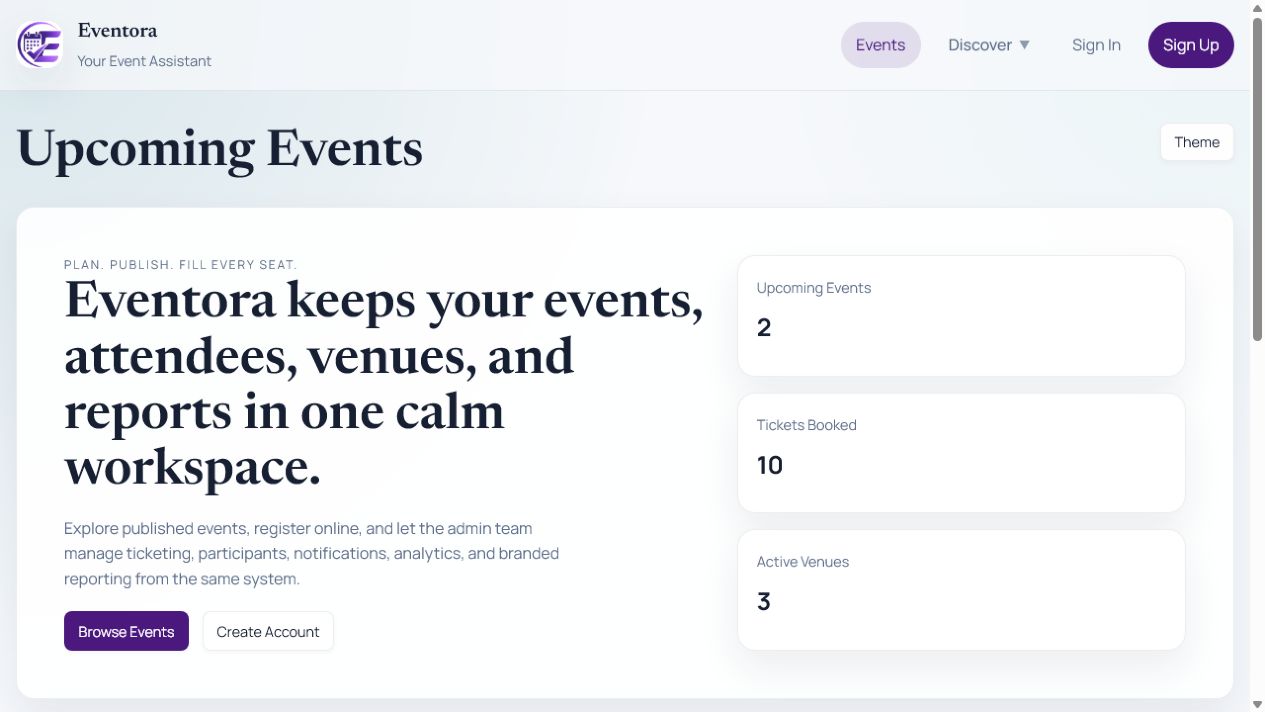
Eventora is a full event lifecycle system for organizers, staff, attendees, and venue teams. Guests can discover published events, filter by category or venue, create an account, reserve ticket types, register multiple participants, pay, retrieve invoices and printable tickets, and manage cancellations. Behind the public experience, administrators coordinate events, capacities, bookings, check-in, feedback, notifications, CMS pages, branding, and exportable management reports from one role-aware workspace.
02 · Features
Eventora features and capabilities
Public event discovery with keyword, category, and venue filters, featured listings, live capacity, and ticket pricing
Unified sign-in for administrators, managers, staff, and attendee accounts with role-aware navigation and protected areas
Multi-ticket event setup with venue-capacity validation, registration deadlines, publishing states, and availability controls
Online and offline booking flows for multiple participants, backed by unique booking and ticket references
Attendee portal for booking history, profile management, payments, invoices, tickets, cancellations, and refund tracking
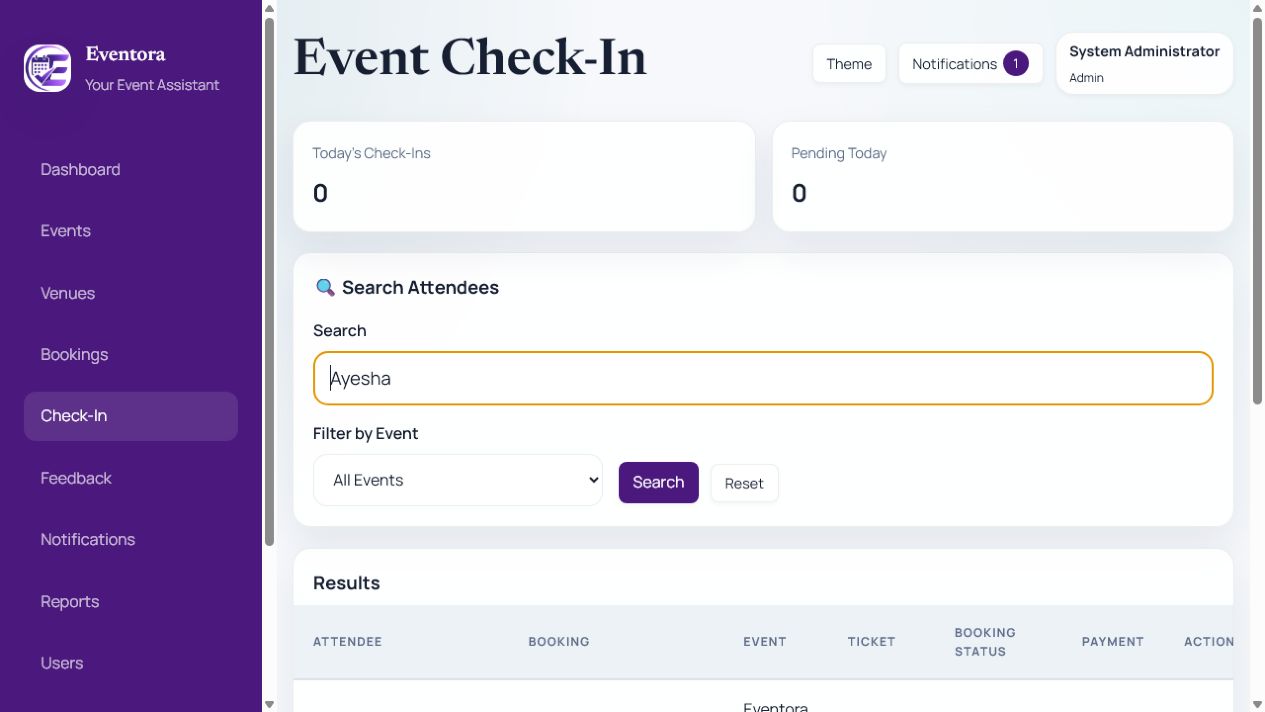
Fast event-day check-in by attendee name, email, booking code, ticket code, or event, with payment-state visibility
Operational tools for venues, users, feedback moderation, notifications, activity history, CMS pages, and configurable branding
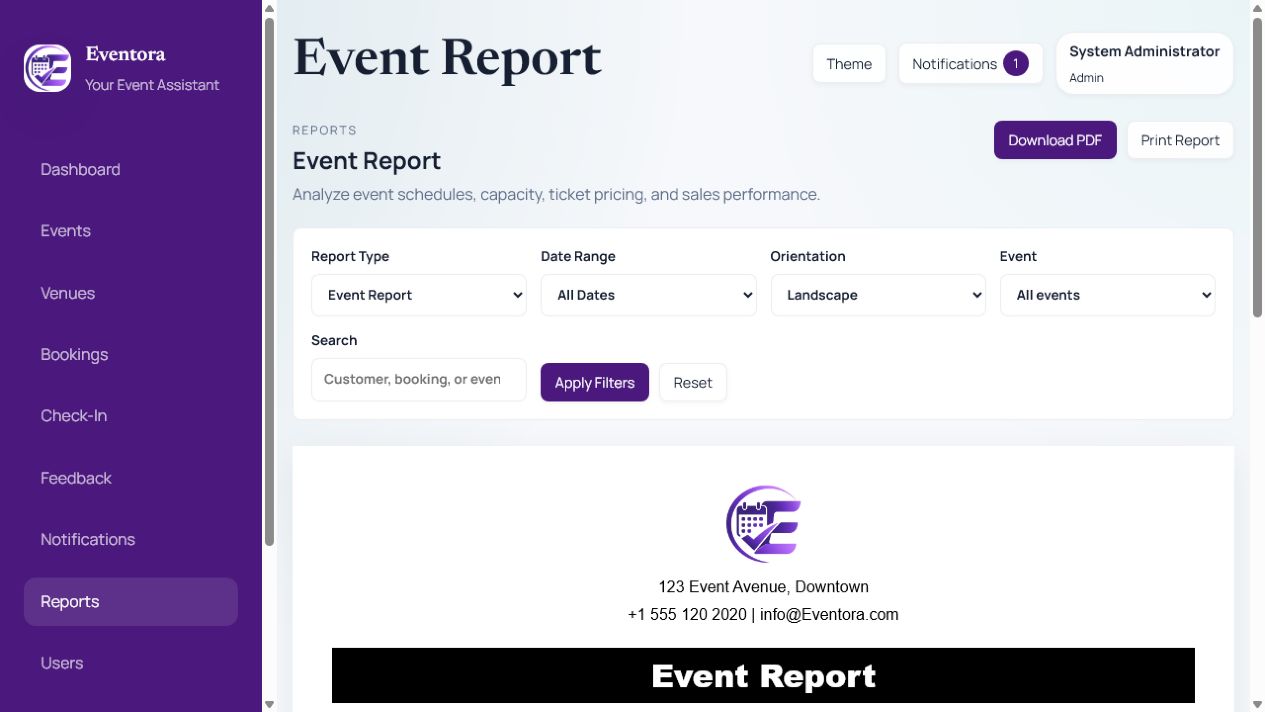
Filterable event, venue, customer, revenue, booking, and participant reports with print-ready views and PDF export
03 · Screenshots
Eventora interface screenshots
04 · Technologies
Technology stack used for Eventora
05 · Challenges
Eventora engineering challenges
- Keeping venue capacity, ticket inventory, participant counts, and booking totals consistent across public and administrative flows
- Supporting guest discovery, attendee self-service, event-day staff, managers, and administrators without mixing permissions or overwhelming navigation
- Representing payment, booking, participant, cancellation, refund, and check-in states clearly as one connected lifecycle
- Turning operational data into useful on-screen, printable, and downloadable reports while preserving organization branding
06 · Solutions
Fahad Naeem’s development approach
- Centralized the relational model around events, ticket types, bookings, participants, payments, refunds, venues, and users, with server-side validation at each transition
- Separated public, attendee, and administrative experiences while using a unified login entry point and explicit admin, manager, and staff roles
- Propagated lifecycle changes across related records so partial cancellations, participant payments, refunds, and check-ins remain visible at both booking and attendee level
- Built a reusable reporting layer with shared filters, date ranges, event selection, search, orientation settings, branded previews, printing, and TCPDF-backed downloads
07 · Results
Eventora project results
One coherent workflow from publishing an event to booking, payment, ticket delivery, check-in, feedback, and reporting
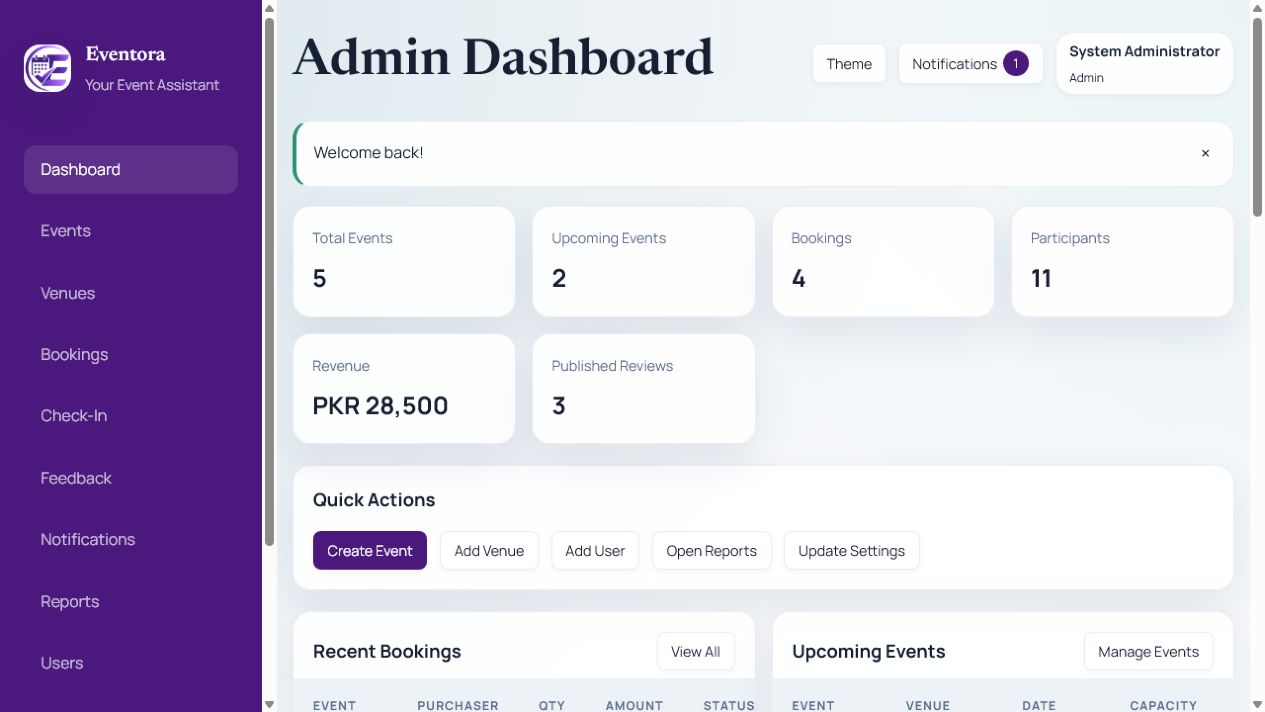
A calm admin dashboard with live visibility into events, bookings, participants, revenue, reviews, notifications, and recent activity
Faster front-desk operations through focused attendee lookup and single-action check-in
A maintainable procedural PHP application that runs directly on XAMPP or standard PHP/MySQL hosting without a framework